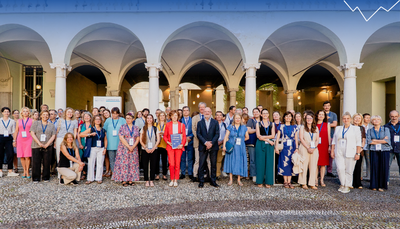
Within the framework of the European Alliance UNITA – Universitas Montium, the Advanced Grants on Research call, dedicated to funding scientific projects, has been concluded. The call involved teams of professors and researchers from the Università di Brescia.
The Advanced Grants on Research call funded a total of 27 scientific projects, with an overall budget of approximately 1 million euro. These projects stood out for their strong positive impact on local communities, laying the foundations for fruitful connections between territories and universities while strengthening the sense of belonging to the European context among the communities involved.
Among the winning teams, each composed of at least three UNITA partner universities, there are 12 projects in which the Università di Brescia is directly involved, confirming the University’s strong Research-Oriented vocation.
At the local level, the outcome of this call, which enabled the allocation of approximately € 100,000 in funding, highlights several important aspects: the European scientific cooperation fostered by the teaching and research staff of the Università di Brescia, the strengthening of synergies and partnerships established with the universities of the UNITA Alliance, and the involvement of all University departments. This achievement demonstrates the ability of the Università di Brescia to actively contribute to the advancement of research across the six thematic hubs of the European Alliance (Cultural Heritage, Green Energy, Circular Economy and Environment, Digital Transition, Global Health and Inclusive Societies).
Prof. Roberto Ranzi, Vice Rector for International Affairs and Scientific Coordinator for our University within the UNITA Alliance, stated: “The active participation of the Università di Brescia in this call demonstrates our University’s ability to promote the development of the rural, mountainous, peripheral, and cross-border territories in which the Alliance’s partner universities operate. This is achieved through education and research activities based on real territorial challenges (challenge-based education) and through the promotion and enhancement of Romance languages.”