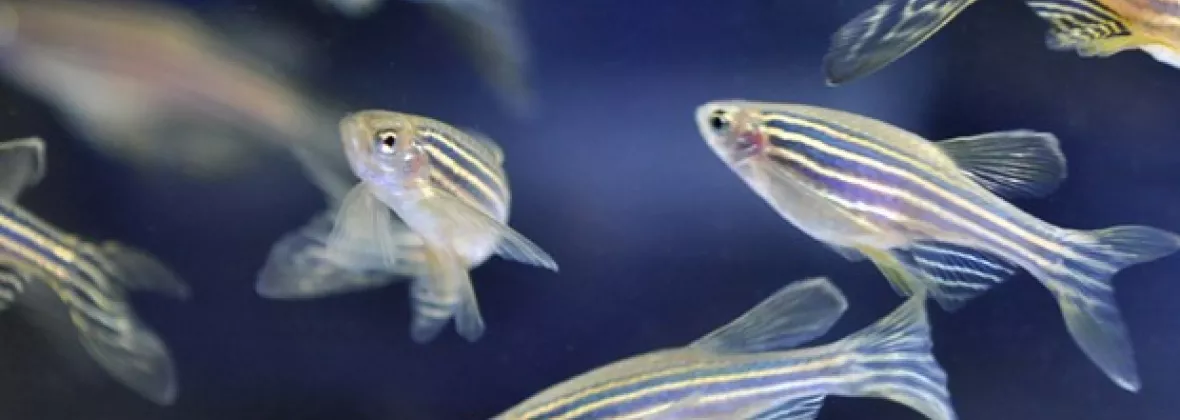
The zebrafish facility comprises:
• Two research laboratories and laboratories for teaching practical sessions for the Biotechnology degree programme, equipped with the main instruments required to carry out experiments in biochemistry, molecular biology and applied biology.
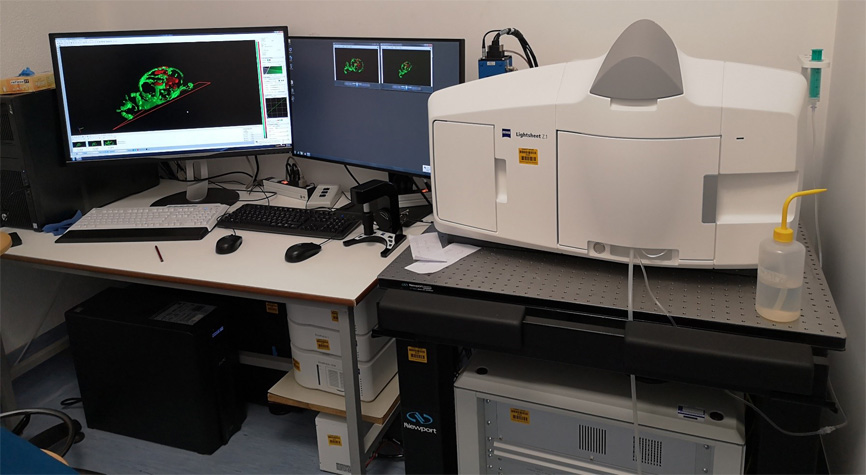
• A live imaging laboratory equipped with sophisticated, state-of-the-art instruments for in vivo imaging: a fluorescence microscope (Axiozoom) and a 3D Lightsheet (Zeiss)
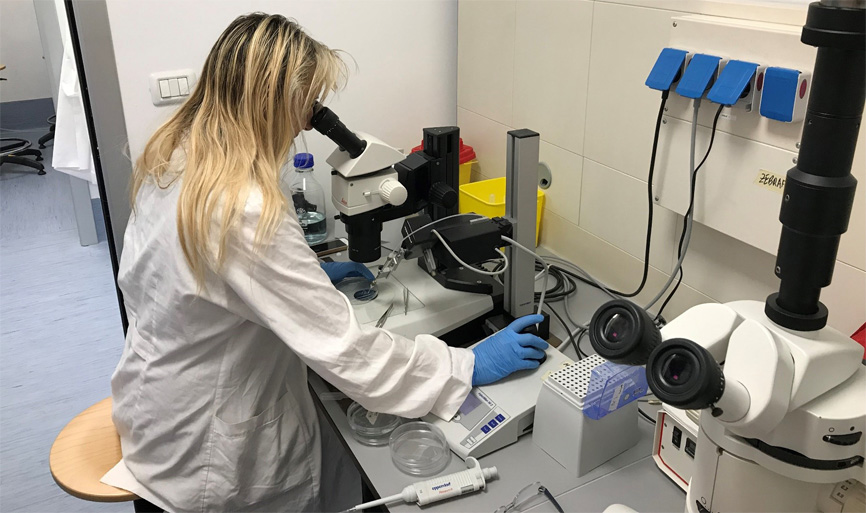
• A micromanipulation and microinjection laboratory equipped with two microinjectors connected to a high-pressure system for the injection of nucleic acids (morpholino, sgRNA, messenger RNA, plasmids) and tumour cells.
• A cell culture laboratory, equipped with a laminar flow hood and a CO₂ incubator. This laboratory is also dedicated to the study of the behaviour of zebrafish using the Danio Vision chamber (Noldus), fitted with a camera capable of recording zebrafish behaviour in response to various stimuli (such as light and noise), and the Danio Vision and Danio Scope software for analysing the results.
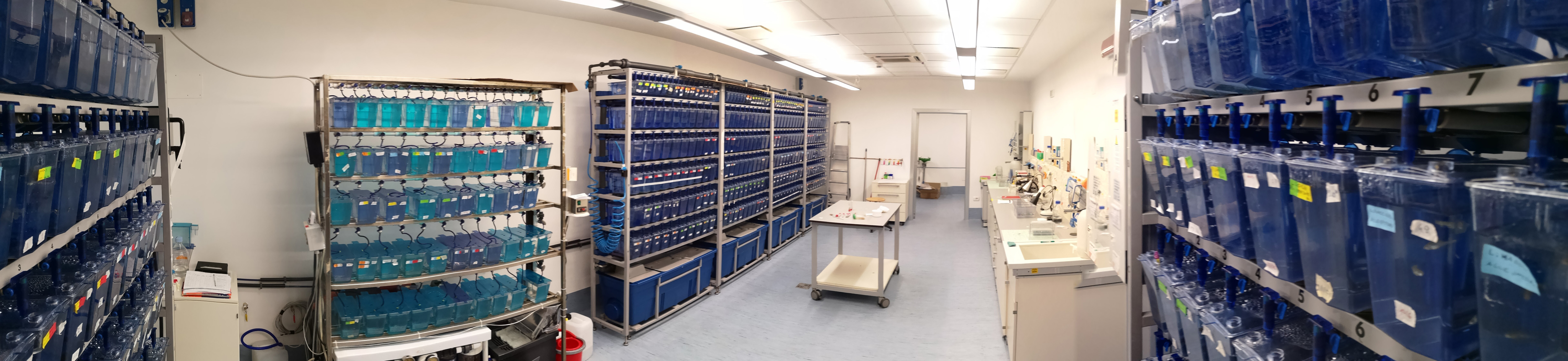
• A room with an automated aquarium system capable of housing, under optimal rearing conditions, approximately 2,000 fish, with a total water capacity of 1,500 litres. The fish are housed in tanks, each with a capacity of 3.5 litres and featuring continuous water recirculation. The aquariums house numerous transgenic and mutant (CRISPR/Cas9) zebrafish lines.
Techniques used at the Facility
The following innovative technologies are used at the zebrafish facility:
The Tol2 system for generating transgenic animals
CRISPR/Cas9 for generating knockout animals
Microinjection of tumour cells (xenografts)
In vivo live imaging for the analysis of gene expression during embryonic development and tumour development
Analysis of zebrafish behaviour
Toxicity studies during embryonic development (FET test)
Analysis of cellular and mitochondrial respiration (Seahorse)