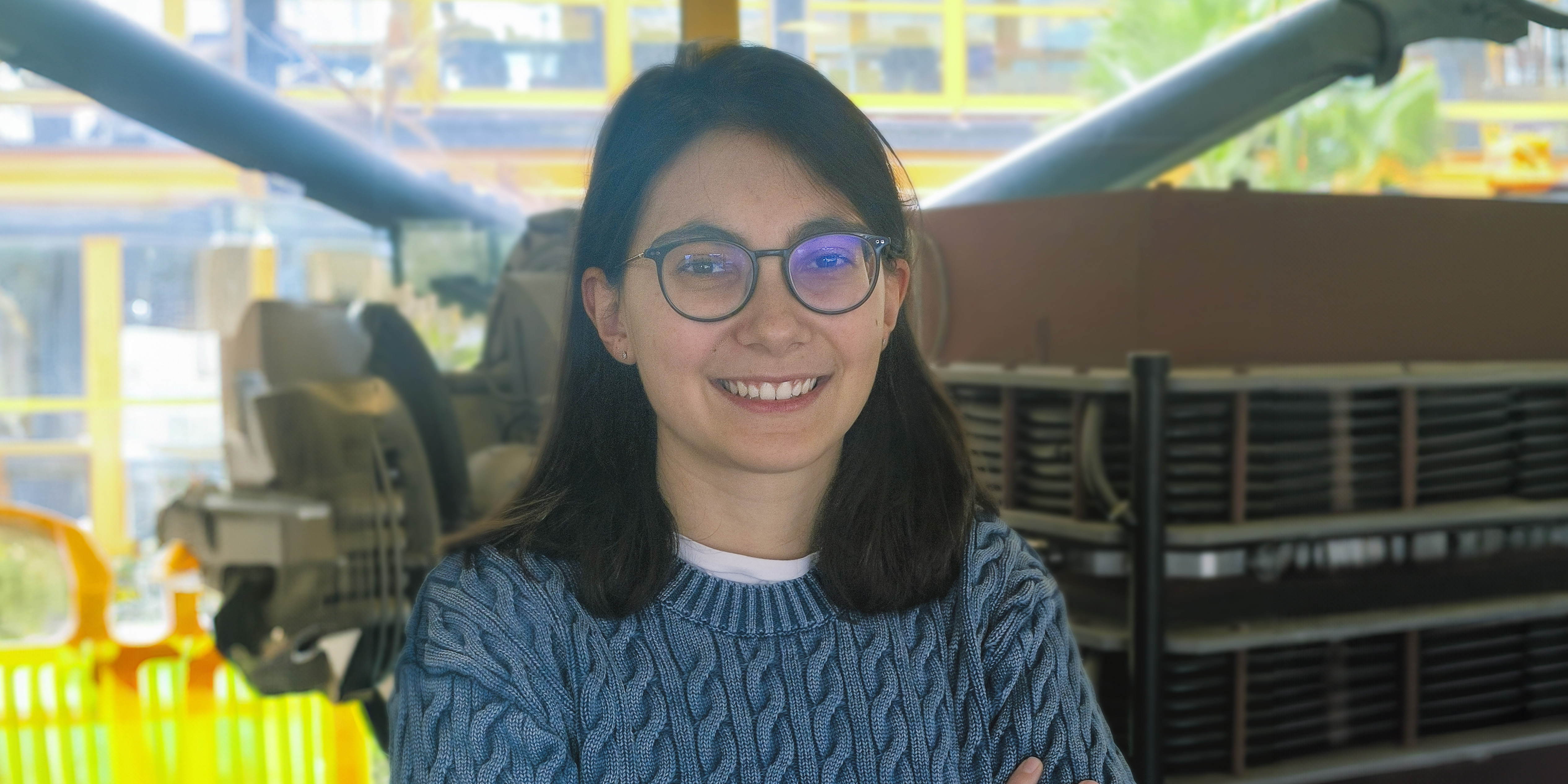
Dr. Marta Urioni, who obtained her PhD at the Department of Mechanical and Industrial Engineering (DIMI) of the University of Brescia, has been awarded the prestigious “Claudio Villi” 2024 Prize by the Italian National Institute for Nuclear Physics (INFN), assigned by the National Scientific Commission 3 for the best doctoral thesis in the field of nuclear physics. Her thesis, entitled “Measurement of Earth's gravitational acceleration on anti-hydrogen with the ALPHA experiment at CERN”, represents a result of international significance: it marks the first measurement of the gravitational interaction between matter and antimatter, obtained using anti-hydrogen atoms in the ALPHA experiment at CERN. The study has been published in Nature. Dr. Urioni is currently a research fellow at the University of Trieste, where she also completed her Master's degree in Physics. The University of Brescia proudly acknowledges this achievement, which highlights the excellence of its doctoral training programmes and strengthens the University’s role in particle and nuclear physics, in collaboration with major international research centres such as CERN. Professor Germano Bonomi, thesis supervisor, states: “We are extremely proud of this recognition. This award demonstrates the excellence of the advanced training that the University of Brescia offers to its PhD candidates”.
The measurement of gravitational acceleration on anti-hydrogen represents a crucial milestone in modern physics: although it had long been theoretically expected that matter and antimatter respond similarly to gravity, experimental data were lacking until recently. Thanks to the contribution of Dr. Urioni, the ALPHA experiment has shown for the first time that anti-hydrogen “falls” under gravity in a way consistent with general relativity, paving the way for further investigations into fundamental symmetries and potential extensions of the Standard Model. UniBs wishes to thank the international ALPHA collaboration, INFN, the CERN colleagues, supervisors, technicians, and all those who supported Marta throughout her research journey.