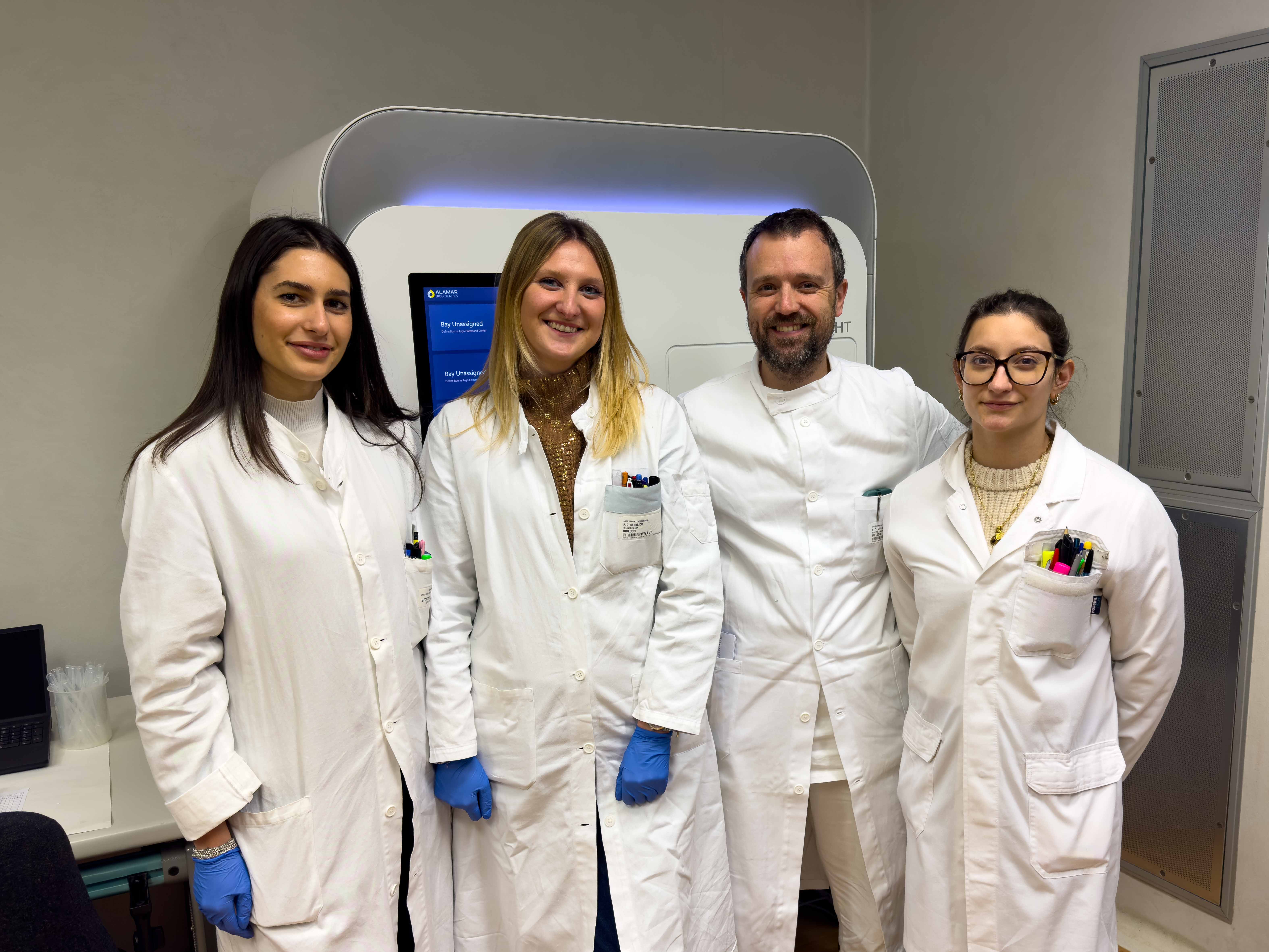
The Metabolic Insulin Resistance and Neurodegeneration (MIND) project, coordinated by Prof. Andrea Pilotto, Associate Professor of Neurology at the University of Brescia, has received €1,445,166 in funding from the Ministry of University and Research (MUR) as part of the Italian Science Fund (FIS) 2024-2025, an initiative aimed at supporting research projects of high scientific merit according to competitive procedures modeled on the European Research Council (ERC), in the categories of Starting Grant, Consolidator Grant, and Advanced Grant.
The MIND project—approved as a Consolidator Grant in the LS5 Neuroscience and Disorders of the Nervous System category—addresses one of the most innovative topics in contemporary biomedical research: the role of insulin resistance as a key and potentially modifiable factor in the brain's vulnerability to neurodegenerative processes. Numerous scientific findings indicate that altered insulin metabolism not only affects metabolic diseases but also directly influences brain function, promoting neuroinflammation, oxidative stress, and the accumulation of pathological proteins associated with diseases such as Alzheimer's and Parkinson's. However, the biological mechanisms that directly link insulin resistance and neurodegeneration are not yet fully understood.
The project will be conducted at the Brain Health Center of the Neurological Clinic, affiliated with the Department of Clinical and Experimental Sciences of the University of Brescia, in the Department of Continuity of Care and Fragility of the ASST Spedali Civili di Brescia, both directed by Prof. Alessandro Padovani. The project is expected to last five years, and the funding received will be used to build a dedicated research team and to upgrade laboratories specializing in the study of the mechanisms linking insulin resistance, metabolic dysfunction, and neurodegeneration.
The study aims to systematically and multidimensionally analyze the relationship between insulin resistance and neurodegeneration in different clinical contexts, including patients with neurodegenerative diseases, individuals at risk but still cognitively healthy, and experimental models. The goal is to understand how insulin resistance affects the structure, function, and organization of brain networks and to identify biological profiles associated with increased vulnerability of the nervous system.
To achieve these objectives, the project will adopt a highly integrated and translational approach, combining clinical studies, advanced neuroimaging, and biomarkers with next-generation animal and cellular models. In particular, animal models of Alzheimer's and Parkinson's disease and cellular models derived from stem cells and brain organoids will be used, allowing for the controlled study of the molecular and cellular mechanisms underlying neurodegeneration associated with metabolic dysfunction.
The experimental activities will also be developed thanks to high-profile scientific collaborations, including the Department of Pharmacology at the University of Milan and the DZNE in Göttingen, Germany, one of Europe's leading centers for research into neurodegenerative diseases.
Overall, the MIND project aims to identify new early risk markers and evaluate targeted intervention strategies for insulin resistance, paving the way for new approaches to prevention and personalized medicine for neurodegenerative diseases and contributing to the development of innovative strategies for protecting brain health during aging.